

A soak can help remove acrylics, but patience matters more than force. To soak off acrylics without nail damage in Reno, NV, first reduce their thickness, then use 100% acetone; a typical soak takes 10-20 minutes. Don’t pry or peel softened product away, since forceful removal can harm the natural nail.
It’s understandable to hope every enhancement will dissolve the same way, but removal depends on the product. This guide explains how acrylic removal differs from gel removal, when an at-home soak may work, and what to do if the product won’t loosen.
You’ll also learn which removal choices affect the overall cost, how to recognize when filing is more appropriate than soaking, and how to care for your nails afterward. The goal is a calm, informed removal, with no tug-of-war at your fingertips.
Key Takeaways
- Compare removal costs by considering the enhancement type and the work involved, rather than assuming every set can be soaked off the same way.
- Match the removal method to the product: some enhancements soften with soaking, while others call for careful filing.
- Use a cuticle pusher gently on softened acrylic, and stop if removal becomes painful or the product resists.
- Learn when an at-home approach is practical and when professional nail care can help protect your natural nails.
How Much Does Acrylic or Gel Nail Removal Cost?
Traditional acrylics typically soften in 10-20 minutes with 100% acetone after their thickness is reduced. Remove softened product gently; pulling or prying can damage the natural nail.
- Compare the removal work, not just the enhancement name. Removal pricing depends on the product, its thickness and adhesion, and whether it needs soaking or careful filing. A price is given after a quote request, based on those factors. Ordinary polish remover may not dissolve traditional acrylic effectively.
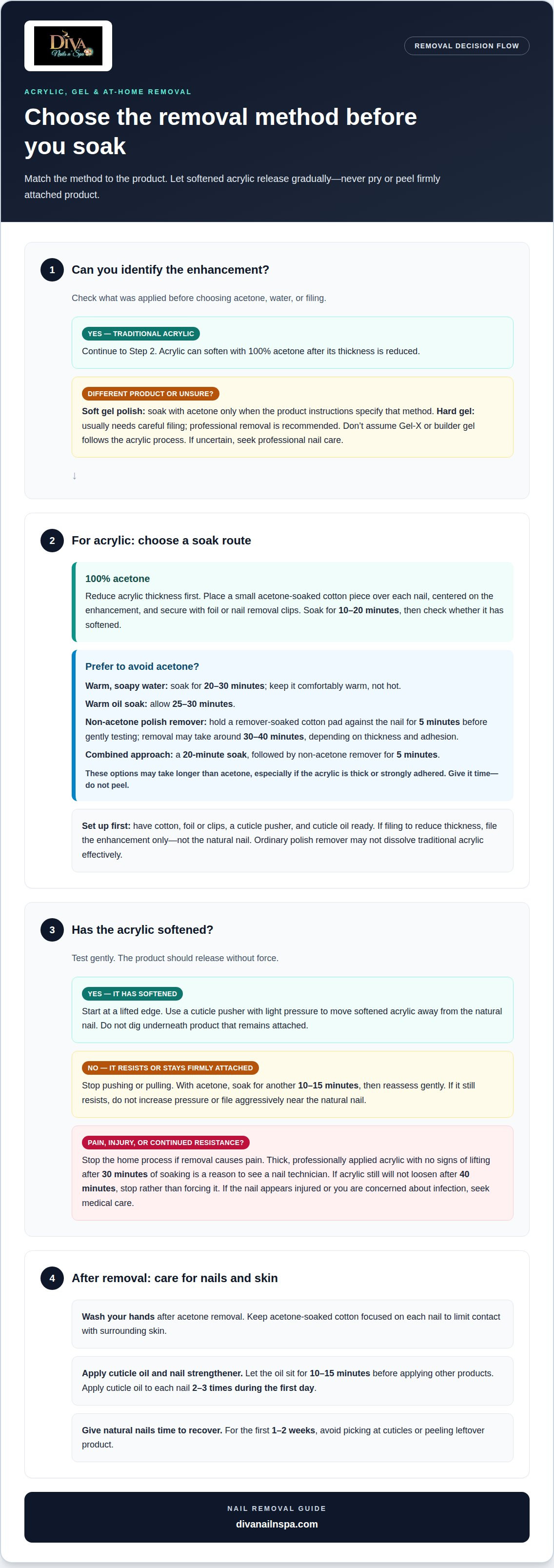
- Use acetone carefully for traditional acrylic. After reducing the acrylic’s thickness, place a small cotton piece saturated with 100% acetone over each nail. Secure it with foil or nail removal clips, keeping the cotton centered on the enhancement. Soak for 10-20 minutes, then gently assess whether the acrylic has softened. Don’t force product that remains firmly attached.
- Choose an acetone-free soak if you prefer to avoid acetone. Warm, soapy water can soften acrylic over 10-20 minutes, while a warm oil soak takes 25-30 minutes. These options may take longer than acetone, especially when acrylic is thick or strongly adhered. Give the product time rather than peeling it from the natural nail.
- Use non-acetone polish remover with patience. Hold a remover-soaked cotton pad against the nail for 5 minutes before gently testing whether the acrylic will slide. Removal may take around 30-40 minutes, depending on thickness and adhesion. A combined approach uses a 20-minute soak followed by non-acetone remover for 5 minutes.
- Protect skin and finish gently. Keep acetone-soaked cotton focused on each nail, rather than letting it spread over surrounding skin. After acrylic is removed, wash your hands to remove acetone from the skin. Soft gel polish may be soaked off with acetone when its product instructions specify that method; gel types don’t all share one removal process.
Choosing a removal method for acrylic, gel, Gel-X, hard gel, and builder gel
Start by identifying the enhancement, since acrylic and gel products don’t all respond to the same removal method. Follow the product’s removal instructions and avoid forceful lifting.
-
Identify the Enhancement First
Check what was applied before choosing acetone, water, or filing. Traditional acrylic can soften with 100% acetone after its thickness is reduced, while soft gel polish is suited to acetone soaking only when its product instructions specify that method. Hard gel is usually removed through careful filing, and professional removal is recommended. Don’t assume Gel-X or builder gel follows the same process as acrylic.
-
Use Cotton Pads and Foil
For acrylic, place a small piece of cotton saturated with 100% acetone directly over each nail, then secure it with aluminum foil or nail removal clips. Keep the cotton centered on the enhancement to limit contact with surrounding skin. After soaking, check whether the acrylic has softened before gently easing it away. If it remains firmly attached, don’t pry or pull.
-
Try Warm Soapy Water
For an acetone-free approach, soak acrylic nails in warm, soapy water for 20-30 minutes. Keep the water comfortably warm, not hot, and use the soak to soften the enhancement rather than force it off. Gently test whether the product has loosened; if it hasn’t, stop and reassess instead of scraping the natural nail. This method may take longer than acetone.
-
Combine Methods Carefully
If acrylic resists one approach, a combined sequence uses a warm-water soak followed by non-acetone remover held against the nail. Apply gentle pressure only as the product loosens, and avoid aggressive filing near the natural nail. If you’re uncertain which enhancement was used, professional nail care can help you choose a suitable next step without treating every gel or acrylic application alike.
Can You Soak Off Acrylic Nails at Home?
At-home removal may work when acrylic softens and releases without force. To soak off acrylics without nail damage in Reno, NV, prepare your supplies first and give the product time to loosen gradually.
If removal causes pain, stop and seek professional help. If your nail appears injured or you’re concerned about infection, seek medical care rather than continuing at home.
- Prepare your supplies. Set out acetone, cotton, foil or nail clips, a cuticle pusher, and cuticle oil. A nail file can reduce the acrylic’s thickness before soaking, but keep it on the enhancement, not the natural nail. Arrange everything beforehand so you don’t have to interrupt the process with acetone-wet hands.
-
Push Away Softened Acrylic
Once the acrylic has softened, use a cuticle pusher to move it gently away from the natural nail. Start at a lifted edge and use light pressure; don’t dig under firmly attached product. If it resists, stop and soak for another 10-15 minutes. For those hoping to soak off acrylics without nail damage in Reno, NV, patience is safer than prying or pulling.
-
Seek Professional Nail Removal
Stop the home process if you feel pain, and seek professional removal. Thick, professionally applied acrylics with no signs of lifting after 30 minutes of soaking are a reason to see a nail technician. If acrylic still won’t loosen after 40 minutes, don’t increase pressure or file aggressively. Hard gel typically requires careful filing, so it isn’t suited to the same soak-off approach.
- Care for nails and cuticles afterward. Wash your hands after acetone removal, then apply cuticle oil and nail strengthener. Let the oil sit for 10-15 minutes before applying other products. Apply cuticle oil to each nail 2-3 times during the first day after removal. For the first 1-2 weeks, avoid picking at cuticles or peeling leftover product as your natural nails recover.
Acrylic nail enhancements
Acrylic enhancements add structure and length, so removal depends on the product’s thickness and attachment. Protect your natural nail by removing the enhancement gradually, rather than treating it like polish.
- Assess the enhancement before removal. Look at its length, thickness, and any lifted edges. A long, bulky set may need more careful reduction than a thin layer. A loose edge is not a reason to peel off the entire enhancement.
- Reduce bulk without filing the natural nail. An 80/80-grit file is recommended for acrylic enhancements. Work only on the acrylic surface, using controlled strokes to reduce its thickness. Stop if you reach the natural nail; excessive filing can leave the nail plate vulnerable.
- Consider how the original application affects removal. Natural nail plate damage can result from incorrect application or removal. Acrylic firmly attached to the nail needs a patient approach; don’t pull a visibly lifted area or use it as leverage.
- Soak based on the acrylic, not its appearance alone. Traditional acrylic can soften in 100% acetone after its thickness is reduced. Check the product as it loosens, and don’t scrape or pry at sections that remain attached. A surface that looks softened may still need more time.
- Keep length and future wear in mind. After removal, natural nails may feel different without the added length and structure of acrylics. Avoid using them as tools or picking at leftover product. Cuticle oil and nail strengthener can support a gentle care routine as your nails recover.
- Choose skilled help when removal becomes difficult. Pain, resistant acrylic, or uncertainty about the enhancement calls for a pause rather than harder filing. For guidance with acrylic enhancement care, explore your nail-care options before attempting another removal method.
Diva Nails n' Spa: Dip Natural Nail
Diva Nails n' Spa offers Dip Natural Nail for readers considering a polished look after acrylic removal. For a simpler finish, choose a Basic Manicure. If you’d like enhancements again, the salon offers Acrylic Nails Fill-Ins and Liquid/Hard Gel Fill-Ins.
Choose your next service based on how your nails feel and the look you want. You might take a break from enhancements with a manicure or choose a fill-in when you’re ready to maintain an acrylic or gel set. A gentle transition helps align your next nail-care choice with your comfort and style.
For a fresh, considered next step after removal, contact Diva Nails n' Spa to discuss your nail-care choice.
Choose Your Next Nail Look With Care
Removal can give you a chance to decide what feels right for your nails next. Consider the finish you want, how much upkeep suits your routine, and whether you’d prefer a natural look or enhancements again. Your preferences can guide a relaxed conversation about your next appointment, without rushing into another set.
If you're hoping to soak off acrylics without nail damage in Reno, NV, give your natural nails time and don’t force removal if they feel tender. A considered next step could be choosing a simpler style or discussing which service suits your preferences.
Contact Diva Nails n' Spa to talk through your next nail-care choice. Take your time, choose the look that feels like you, and enjoy a fresh start for your nails.
Frequently Asked Questions
All soaked off?
No, not every nail enhancement can be removed by soaking. Traditional acrylic can soften with acetone, and some soft gel polish can be soaked off when the product instructions specify that method. Hard gel is generally removed through careful filing instead. Press-on nails may respond to soaking, but identify the material first to avoid using a method that won’t release it.
Should You Remove Acrylic Nails Before Getting a New Set?
Yes, existing acrylic needs to be addressed before applying a new set so the nail surface can be assessed. Don’t layer fresh product over lifting acrylic or trapped debris. Your next choice also depends on the finish you want: an acrylic fill-in maintains acrylic enhancements, while a basic manicure offers a simpler option. If removal hurts, pause rather than proceeding with another set.
What Kind of False Nails Can Be Removed Without Acetone?
Press-on nails and some acrylic enhancements may loosen with acetone-free soaking, but results depend on the adhesive and product. Warm, soapy water or a warm oil soak may help. Don’t pull just because you’re soaking: wait for the bond to loosen, and avoid levering the artificial nail against your natural nail. Gel products require method-specific removal.
What is Acetone and Why Do People Want to Avoid It?
Acetone is a solvent that softens certain nail products, including traditional acrylic. Some people prefer an acetone-free method to avoid using a strong solvent during removal. Warm, soapy water or oil takes a different approach and may require more patience. Match the method to the enhancement rather than substituting ordinary polish remover for every product.


