

A lifted gel edge isn’t a cue to peel or clip it: picking can thin your nails, while trimming or filing the gel can break its seal and cause more lifting or splitting. A gel manicure may stay glossy and chip-free for two to three weeks, and careful daily habits can help you get more wear from it. Learning how to make gel nails last longer starts with protecting the manicure, not forcing a lifted spot back into place.
It’s frustrating when a fresh set catches or begins to lift, especially if you’ve been careful with your hands. Nail preparation, polish habits, sunscreen, oils, and household tasks can all affect how long a gel manicure lasts. Here’s what to do, what to avoid if an edge lifts, and how everyday water and household chemicals can put your manicure to the test.
Key Takeaways
- Resist biting, peeling, or clipping a lifted edge; these habits can damage the nail or weaken the manicure’s seal.
- Clean, dry nail preparation and careful cuticle care help create a better foundation for gel polish.
- Be mindful with sunscreen and oils, which can contribute to lifting when they come into contact with gel polish.
- Wear gloves for cleaning and washing up to help shield your manicure from household chemicals and water.
1. Avoiding biting, clipping, and peeling gel polish
A lifted corner can be tempting to bite or peel, especially when it catches on clothing. Resist the urge: picking or chewing gel polish can thin the natural nail underneath. Peeling also pulls at the bond between the polish and nail plate, leaving a rough surface that may catch again. If you notice an edge lifting, keep your hands away from it instead of testing how much comes off.
Avoid trimming or filing your gel manicure at home. Clippers and files can break the sealed edge, which may lead to further lifting, peeling, or splitting. If a rough edge needs attention, gentle filing is preferable to biting or clipping, but avoid filing through the polish. Keeping the nail shape and sealed edge intact helps protect the manicure, which may remain glossy and chip-free for two to three weeks.
Wipe gel polish off the skin or cuticles before curing. Polish left on surrounding skin can contribute to premature lifting, so precise application matters. Thin layers also help prevent pooling and uneven curing. Follow the product and lamp instructions, since curing times differ between UV and LED lamps. There isn’t one curing time that fits every gel polish and lamp combination.
To help prevent lifting, peeling, and chipping, keep gel off the skin, avoid picking, and protect the free edge. A basecoat helps gel polish adhere and can protect nails against staining; a topcoat adds a protective layer against chips and cracks. Choose products designed to work together, and take care not to peel the manicure during cleaning or daily tasks.
UV and LED lamps cure gel polish, but lamp exposure alone doesn’t establish whether a product or lamp is harmful. Reduce avoidable problems by following product directions, keeping uncured gel off your skin, and avoiding incorrect application or removal, which can damage nails. If gel touches the cuticle, wipe it away before curing.
2. Cuticle and nail plate preparation
A smooth gel manicure starts with clean, dry nail plates. According to The GelBottle, moisture can interfere with bonding, so dry your hands thoroughly after washing before application. If you’re learning how to make gel nails last longer, treat preparation as a careful sequence, not a quick buff. Even a small patch of dampness can affect how gel adheres.
Push cuticles back gently and remove dead skin from the nail plate. Skin trapped beneath polish can contribute to lifting. Use a 180-grit buffer lightly to remove surface shine without thinning the natural nail. Then cleanse each nail with acetone or an alcohol cleanser to remove oils, dust, and residue. A nail dehydrator can remove remaining moisture before polish goes on.
Apply products in order: basecoat, thin layers of gel polish, then topcoat. Cure each layer according to the product and lamp instructions, since UV and LED curing times can differ. Keep polish neat around the cuticle, and avoid touching the cleansed nail plate before application. These steps help create a clean surface for the manicure.
After application, use cuticle oil daily while wearing gel nails to moisturize the cuticles and support nail health. Massage it around each nail, not across the polish surface. Parents wondering how to make gel nails last longer can add cuticle oil to a child’s bedtime routine, applying it gently around the nail edges. After washing, dry hands thoroughly before applying oil.
Shape nails gently before application, keeping edges even and avoiding aggressive filing near the cuticle. A rough edge can snag, while over-buffing can thin the nail plate. For a child, use gentle pressure and stop if the cuticle feels tender. Clean preparation, careful shaping, and daily oil make nail care easier to maintain.
3. Possible effects of sunscreen and oils on gel polish
Sunscreen protects skin, but residue on gel polish can affect its bond. Oils can also contribute to lifting when they reach the polish surface or edges. After applying sunscreen or hand oil, gently wipe residue from your nails with a clean tissue. Avoid rubbing product into the nail edges, where lifting may begin. For children, an adult can apply sunscreen carefully and clean any visible residue from the nails.
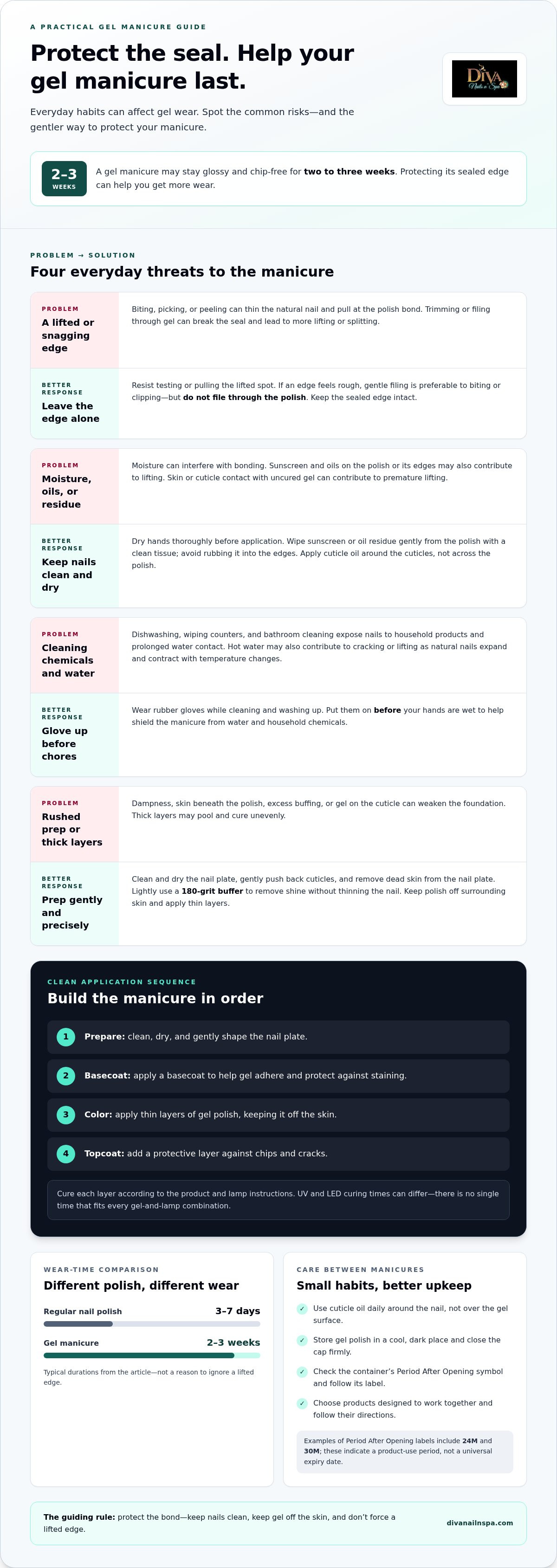
Wear time differs by polish type. Regular nail polish typically lasts 3-7 days, while a gel manicure may provide glossy, chip-free wear for two to three weeks. These are typical durations, not a reason to ignore an edge that starts lifting. Keep nails clean, and avoid picking at polish that catches after sunscreen application or play.
Cuticle oil supports nail and cuticle care, but placement matters while gel polish is on. Apply it around the cuticles rather than flooding the nail surface. If oil or sunscreen gets onto the polish, gently remove the residue instead of scrubbing the finish. Gloves are useful for cleaning tasks, where household products and water can also affect a manicure.
Check the container for its Period After Opening symbol, often shown as an open jar with a number and “M.” Examples include 24M and 30M after opening. These examples describe a product-use period, not a universal expiry date for every polish. Note when a bottle is opened, then follow its label rather than relying on color or appearance alone.
Store gel polish in a cool, dark place with the cap firmly closed to help prevent it from thickening or drying out. Close the bottle promptly after use, and keep it away from direct light and heat. Thickened polish can be harder to apply smoothly, while a secure cap limits exposure to air. These simple habits help maintain the polish’s consistency and support a neat finish.
4. Protecting nails from household tasks and chemicals
Household chores can expose a manicure to cleaning chemicals and prolonged contact with water. Washing dishes, wiping counters, and cleaning a bathroom are common examples. Wear rubber gloves while cleaning and washing up to help protect gel polish from these exposures. Put on gloves before the task, not after your hands are already wet.
Take care around hot water, too. Natural nails can expand and contract with temperature changes, which may cause gel polish to crack or lift. A long session washing dishes in hot water combines warmth with moisture. Gloves help create a barrier, while shorter contact with hot water reduces repeated exposure during everyday chores.
Choose gloves that let you handle cleaning tools comfortably, then put them on before using household chemicals. Keep the fingertips intact: a tear can let water or cleaning products reach your nails. After cleaning, remove the gloves and dry your hands rather than leaving moisture trapped around the nail edges. If the gloves become wet inside, take them off and dry your hands before continuing.
For children, keep the routine simple: an adult can put out gloves before a cleaning task and supervise their use. During washing up, discourage repeated scraping of gel nails against dishes or utensils. For chores that don’t require water or chemicals, avoid using nail tips to pry open lids or scratch at stuck residue. Those actions can stress the polish edge and invite lifting.
Check the manicure after chores, especially if a nail has caught on a glove or cleaning cloth. Don’t pull at a lifted edge; peeling can damage the nail underneath. If repeated household wear makes gel upkeep inconvenient, consider a different nail look, such as a Dip Natural Nail service.
Diva Nails n' Spa: Liquid/Hard Gel Fill-Ins
Diva Nails n' Spa offers Liquid/Hard Gel Fill-Ins for maintaining a gel set as your nails grow. If a manicure needs professional attention rather than at-home clipping or peeling, a fill-in is a practical next step. For a child choosing a gel look, the salon also offers a Kids Gel Manicure.
Daily care still matters between appointments: wear gloves during cleaning, keep polish away from cuticles, and don’t pick at lifted edges. These habits help protect the manicure, while a fill-in can address regrowth as part of ongoing nail care. For a different finish, Diva Nails n' Spa also offers Dip Natural Nail and Manicure: Basic.
Contact Diva Nails n' Spa to discuss which nail service suits your needs.
Make Nail Care Part of the Routine
For a child, the best nail-care plan is one that fits naturally into everyday habits. Pair glove use with cleaning, and make gentle nail care part of getting ready for bed. A simple routine is a practical way to learn how to make gel nails last longer without turning manicure care into another chore.
If the current finish no longer suits your child’s routine, consider a different nail service for the next appointment. Diva Nails n' Spa offers Liquid/Hard Gel Fill-Ins, Dip Natural Nail, and Basic Manicure services. Each offers a different approach to nail care, so you can choose what feels right for your child’s preferences and daily activities.
For help choosing a next step, contact Diva Nails n' Spa. With a comfortable care routine and a style your child enjoys, keeping nails neat can feel simple and fun.
Frequently Asked Questions
Can You Fix a Lifted Gel Nail at Home?
A lifted gel nail is best left unpeeled rather than patched at home. Don’t pull the edge, force product underneath, or use household glue, since these steps can disturb the nail and worsen the lift. Keep the nail from catching on fabric, and seek professional attention if the lifted area keeps snagging or spreading.
How Can Clients Look After Gel Nails Post-Treatment?
Don’t use gel nails as tools after an appointment. For example, use a fingertip rather than a nail edge to peel a sticker or open a snack wrapper. If a nail catches during play or dressing, stop and check the edge instead of tugging. These small adjustments can help protect the manicure during a child’s daily routine.
How Long Should Gel Nails Last?
A gel manicure may provide glossy, chip-free wear for two to three weeks. Nail growth can make the gap near the cuticle more noticeable before the polish itself chips, so the manicure’s appearance may change over time. A snagged or lifting edge is a separate concern: don’t wait for a calendar date to stop picking at it.
When Should You Remove Gel Polish or Gel-X Extensions?
Remove gel polish or Gel-X extensions when the finish is significantly lifting, damaged, or ready for a fresh set. Don’t peel or pry them off, since incorrect gel removal can damage nails. Avoid using household tools to force product away. A nail professional can assess the existing set and handle removal without encouraging you to pull at it yourself.


