

A pedicure is commonly scheduled every 3 to 5 weeks, but callus smoothing doesn’t follow a single schedule for everyone. A callus smoothing foot treatment in Reno, NV can help reduce thickened skin that builds up where friction or pressure repeatedly affects the foot. How quickly that skin returns depends in part on the rubbing and pressure that caused it.
If rough, thickened skin makes your feet uncomfortable or less smooth, you may be looking for a little extra care. This guide explains how calluses and corns form, what callus removal can address, and when foot symptoms call for medical care rather than a cosmetic treatment.
You’ll learn what to expect from callus smoothing, how footwear and daily habits can affect buildup, and how to plan pedicure timing. Understanding the causes and options makes it easier to choose foot care that suits your needs.
Key Takeaways
- A pedicure is commonly scheduled every 3 to 5 weeks, while callus buildup may vary with the friction and pressure your feet experience.
- Learn how calluses and corns differ and how footwear that fits well can help reduce repeated rubbing.
- Recognize when thickened skin is a cosmetic concern and when pain, swelling, numbness, or an open sore calls for medical care.
- Explore what callus removal can address and how a spa treatment differs from podiatric care for foot health concerns.
Foot conditions treated by the practice
Callus smoothing addresses thickened skin that develops where repeated friction or pressure affects the foot. It can smooth rough areas, such as a hardened patch beneath the ball of the foot. Corns and calluses are different forms of thickened skin, often appearing where shoes or foot structure cause repeated rubbing. Cosmetic treatment works on the skin’s surface; it does not address every cause of foot pain or every foot and ankle condition.
Other foot conditions include bunions, hammertoes, ingrown toenails, dry or brittle skin and nails, heel pain, and fungal infections. Arthritis and diabetes can also contribute to foot complications. For example, plantar fasciitis involves inflammation in the tissue band extending from the heel toward the toes and can cause heel pain. These concerns need different care from callus smoothing.
Notice how your feet feel during everyday activities. Pain while walking, standing, or bearing weight, as well as swelling, stiffness, numbness, or persistent heel or arch pain, may signal a concern beyond surface buildup. Redness or swelling around a joint also warrants medical evaluation. See a podiatric physician for an open sore or ulcer on your foot.
Seek podiatric care for sudden, severe foot pain, pain after an injury, or pain that persists despite self-care. People with diabetes or peripheral vascular disease should seek care for foot pain. Diabetes can make wounds and infections harder to notice, so even a minor injury deserves attention. Callus treatment is not a substitute for medical evaluation of these signs.
Do you need an appointment? An appointment is a practical choice for planned callus care because it sets aside time to discuss the area you want smoothed. Don’t assume a walk-in will fit a particular schedule. If you have pain, numbness, swelling, or an open sore, prioritize medical evaluation over cosmetic smoothing.
Callus removal and smoothing
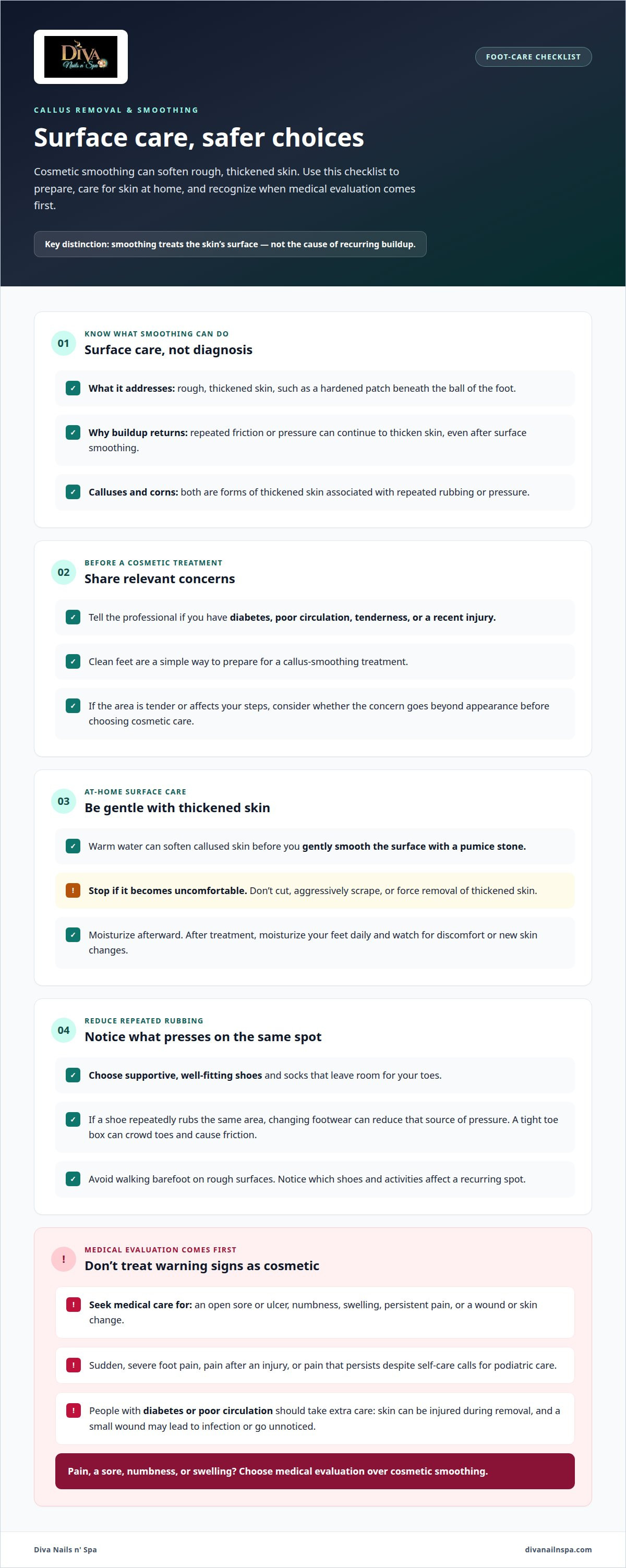
A callus smoothing foot treatment in Reno, NV can soften the appearance of rough, thickened skin. Cosmetic smoothing focuses on the skin’s surface, not on diagnosing why a callus keeps returning. Friction and pressure may continue to cause buildup, so footwear and daily habits matter alongside salon care. If the area is tender or affects your steps, consider whether the concern goes beyond appearance before choosing cosmetic treatment.
People with diabetes or poor circulation should take extra care. Skin can be injured during removal, and even a small wound may lead to infection or go unnoticed. Avoid cutting or aggressively scraping thickened skin at home. For foot pain, a sore, or a skin change, podiatric care is a safer next step than cosmetic smoothing.
Before a callus smoothing foot treatment in Reno, NV, tell the professional about relevant concerns, such as diabetes, poor circulation, tenderness, or a recent injury. Clean feet are a simple way to prepare. Afterward, moisturize your feet daily and watch for discomfort or new skin changes. If pain or a wound appears, seek medical evaluation instead of continuing cosmetic care.
At home, warm water can soften callused skin before you gently smooth the surface with a pumice stone. Stop if the skin becomes uncomfortable, and don’t cut or force removal. Apply moisturizer afterward. Supportive footwear can reduce repeated pressure, and avoiding barefoot walking on rough surfaces can help limit friction.
Cosmetic removal suits rough skin when the goal is surface care, not medical treatment. An open sore, numbness, swelling, or persistent pain calls for medical evaluation first. For routine smoothing, explore callus care options as part of your foot-care routine.
Calluses and corns caused by friction or pressure
Repeated rubbing or pressure can thicken skin on the sole. A callus may form beneath the ball of the foot, where each step presses against the ground. Corns are another form of thickened skin associated with friction or pressure. Both can make a familiar shoe uncomfortable if its fit concentrates rubbing in one spot. Age, lifestyle, weight, and ill-fitting shoes can also affect foot conditions.
Notice where thickened skin appears and what touches that area. A tight toe box, for example, can crowd the toes and cause repeated friction. Well-fitting shoes and socks that leave room for your toes help limit pressure. Supportive footwear can also make daily activities more comfortable. These practical changes may ease discomfort by reducing the rubbing that contributes to skin buildup.
Between pedicures, try a few simple habits: choose supportive shoes, wear well-fitting socks, and avoid walking barefoot on rough surfaces. If a particular shoe repeatedly rubs the same area, changing footwear can reduce that source of pressure. Moisturize your feet daily to help maintain the skin. These steps address everyday friction, but they don’t diagnose a painful or persistent foot problem.
Many foot conditions can affect comfort, so don’t assume every thickened patch is only a cosmetic concern. Pain, swelling, numbness, or an open sore calls for medical evaluation. Hammertoes, for example, can change how toes meet footwear; early care may include footwear changes to help avoid surgery. If pressure-related skin changes return, note which shoes and activities affect the same spot, then discuss persistent symptoms with a podiatric physician.
Calluses are thickened skin on the sole caused by frequent rubbing or pressure. This can help you connect a thickened patch with repeated contact. Older adults should choose well-fitting shoes and socks that leave room for their toes. A comfortable fit and room for toes are useful priorities when selecting footwear; avoid shoes or socks that crowd the toes or press repeatedly against one area.
What is the difference between a spa pedicure and podiatrist callus treatment?
A spa pedicure is cosmetic foot care intended to improve the appearance and feel of your feet. Callus smoothing can reduce rough, thickened skin, but it doesn’t diagnose why the skin formed. A podiatrist provides medical evaluation for foot conditions, including painful calluses or symptoms linked to another concern. The distinction is purpose: surface care versus assessing and treating a medical problem.
Consider a dry, painless patch that feels rough against a sock. Cosmetic smoothing may suit that concern. A painful spot that changes how you walk needs a different response. A podiatrist can assess foot pain and consider whether pressure, foot structure, or another condition contributes. Persistent heel or arch pain, for example, may relate to plantar fasciitis, which involves tissue extending from the heel toward the toes.
Choose medical evaluation for an open sore, sudden severe pain, pain after an injury, or numbness. Redness or swelling around a joint also warrants attention. People with diabetes or peripheral vascular disease should seek podiatric care for foot pain. Diabetes can make wounds and infections harder to notice, so cosmetic smoothing is not a substitute for evaluating a wound or concerning change.
For everyday cosmetic care, a spa pedicure can address surface roughness and support a polished appearance. Professionals commonly recommend scheduling a pedicure every 3 to 5 weeks. That timing is a general guide, not treatment for a painful or persistent condition. If symptoms continue despite self-care, consult a podiatric physician. Match the service to the concern: cosmetic care for appearance, medical care for pain, injury, wounds, or other symptoms.
If your goal is cosmetic care for rough skin, explore callus care and choose a foot-care appointment that fits your needs.
Between appointments, moisturize your feet daily to help maintain foot health, and apply cuticle oil regularly to support foot health and the appearance of your pedicure. For a summer vacation, schedule a pedicure one or two days before the trip. After a pedicure with regular nail polish, wait until the polish is completely dry before wearing sandals.
Redness or swelling around the joints is a reason to see a podiatrist. If foot pain persists despite self-care, see a podiatric physician for evaluation rather than relying on another cosmetic appointment.
Diva Nails n' Spa: Callus Removal
Diva Nails n' Spa offers Add-On: Callus Removal for cosmetic smoothing of rough, thickened skin. It may suit you if pressure-related buildup leaves your feet feeling less soft and you want salon foot care in Reno. This service is not medical podiatry, so painful areas, numbness, swelling, or open sores need medical attention instead. For everyday roughness, callus care can complement habits such as moisturizing your feet and wearing supportive footwear. Choose the service for surface care, not to diagnose the cause of recurring skin changes. If cosmetic callus removal suits your needs, contact Diva Nails n' Spa to discuss your foot-care appointment.
Make Foot Care Part of Your Routine
Comfortable foot care can be a small, intentional part of feeling polished from head to toe. As you plan your next self-care appointment, consider what would make the visit feel complete, whether that’s focusing on smoother-looking feet or pairing it with another beauty service. Diva Nails & Spa also offers Basic Manicure, Dip Natural Nail, and Liquid/Hard Gel Fill-Ins.
If cosmetic smoothing suits your needs, a callus smoothing foot treatment in Reno, NV can be a considered next step for rough skin. Keep supportive footwear and regular moisturizing in your routine to care for your feet between visits. For a welcoming start, contact Diva Nails n' Spa to ask about callus removal. A little thoughtful care can help you feel refreshed and ready for what’s next.
Frequently Asked Questions
Where can I get professional callus smoothing or foot treatments in Reno, NV?
Diva Nails & Spa in Reno offers Add-On: Callus Removal for cosmetic care of rough, thickened skin. It may suit you if you’d like to include callus care with a salon visit. For foot pain, numbness, an open sore, or another medical concern, seek evaluation from a podiatric physician rather than relying on a spa treatment.
How do professionals safely smooth or remove foot calluses?
For cosmetic callus care, professionals smooth surface buildup rather than diagnose its cause. Don’t cut or aggressively scrape a callus at home, since broken skin can create a wound. If you have diabetes or poor circulation, or notice pain or a sore, seek podiatric care before cosmetic removal. Well-fitting shoes can also help limit the repeated pressure that contributes to thickened skin.


